
600 Years of History, Nature, Agriculture and Beauty

The history of Giol spans six centuries of transformation, with viticulture as its constant thread. Since 1427, each era has left its mark, contributing experiences and knowledge that have helped shape the identity of the Estate and its wines.
Behind every harvest are people, skills and practices passed down through generations. Knowledge of the vine, an understanding of the seasons and experience gained in the field form a heritage built through everyday work.
Vineyards, historic cellars, agricultural buildings, the Park and the Castle tell the story of the relationship between human activity and nature. Together, they form a landscape in which historical value intertwines with environmental and agricultural significance, creating a heritage to be preserved and enhanced.
Giol’s long agricultural experience is reflected in its commitment to evolve. Since 1987, organic viticulture has represented a tangible choice, now complemented by a commitment to regenerative agriculture, with a focus on soil health and biodiversity.
Innovation means applying new knowledge to improve the way we cultivate, without losing sight of the value of our roots.
In 2027, Giol celebrates 600 years of agricultural history. A milestone that goes beyond the anniversary itself and renews our commitment to safeguarding this heritage, leaving future generations a fertile, thriving territory rich in beauty.
600 harvests. A story that continues.

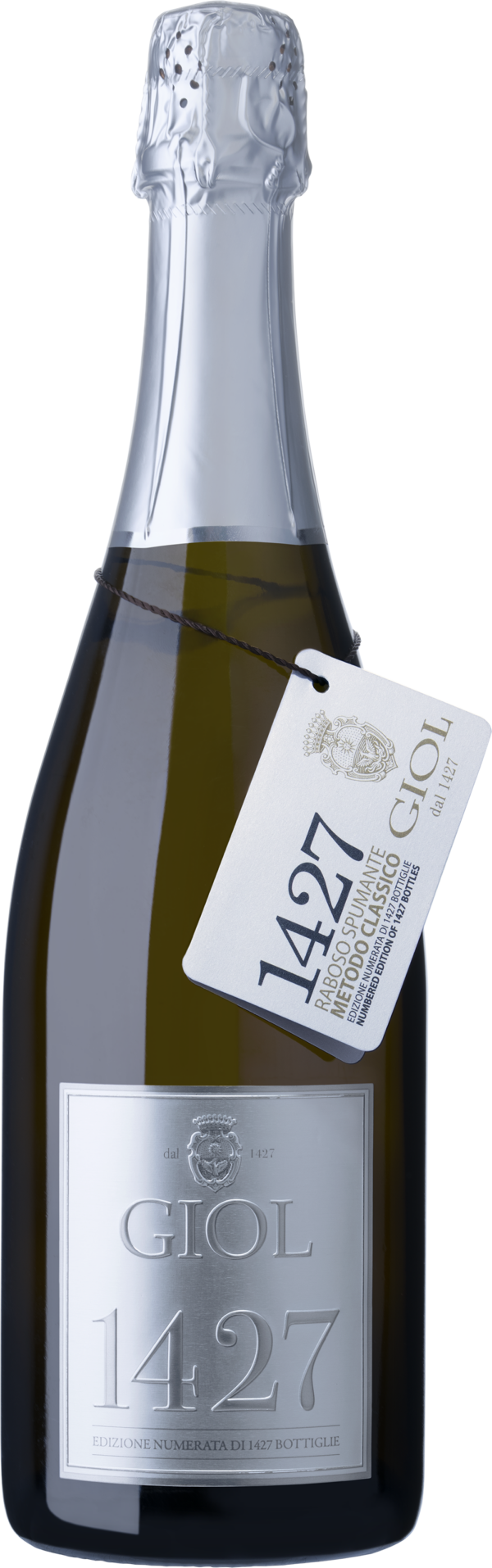
The commemorative bottle.
A toast to our 600th anniversary
“600” is a numbered release of 600 bottles, a symbolic tribute to the 600 harvests (1427–2026) the Estate has lived through since its foundation.
It originates from our historic vineyard on Via San Martino. In the 2nd century AD, the Romans built an aqueduct to channel the spring waters of the Sinistra Piave toward Opitergium—today’s Oderzo—then a flourishing imperial centre: the source of that aqueduct lies exactly beneath this vineyard. From this parcel we selected our finest white grapes: Verduzzo, Chardonnay and Tremier. We vinified them using the traditional metodo classico to enhance their typicity, finesse and aromatic complexity. Ageing on the lees took place in the oldest and coolest part of our cellars.
“600” celebrates time, land and heritage: a small act of memory that becomes an experience to share.