Regenerative organic agriculture

“We firmly believe that healthy soil produces healthy plants, and healthier plants rely less on pesticides and chemical fertilizers… Balanced, vital grapes lead to higher-quality wines. This enables us to intervene less during winemaking and produce wines that truly reflect the character of the soil and our heritage.”
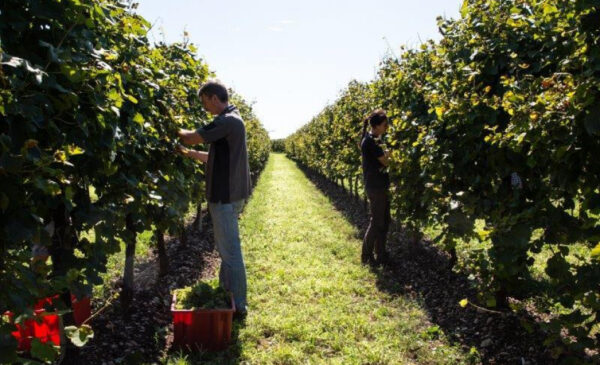
The Giol work team
Explaining regenerative organic agriculture
Tenuta Giol’s commitment to cultivating the land in a respectful and responsible manner dates back to 1987, when the company decided to produce organic wines exclusively. Since then, our commitment to protecting the environment and caring for the soil has never wavered. Today, this commitment has led us to reach a highly valuable milestone: Regenerative Organic Certified™ (ROC™) status, which recognizes regenerative organic agricultural practices focused on soil health, animal welfare, and social fairness.
For us, regenerative organic agriculture represents a natural evolution of our long-standing commitment. It means restoring vitality to the soil, improving soil health over time, and supporting a more balanced and resilient ecosystem. The practices we adopt aim to foster a thriving and sustainable agricultural environment.
What we do
Cover cropping
Healthy soil is the first step to producing good wine: this is why we use cover cropping in our fields, a technique frequently adopted in organic farming to improve the soil’s characteristics. It consists of sowing crops such as barley, oat, clover, rapeseed, mustard, lacy phacelia, and field pea that promote the accumulation of nitrogen, an organic dry substance that has a fertilising and protective function for soil stabilisation. We sow these crops every year where necessary, in early autumn. In May, when they are in full bloom, we mow them, then either plough them in or leave them on the ground. This has a dual benefit for the soil: it releases organic substances and, once decomposed, the roots of all the different plants create the correct porosity for soil aeration. What’s more, while the crops are in bloom, our fields fill with insects that help to increase biodiversity and a consequent equilibrium between the insects themselves.
Beneficial insect release
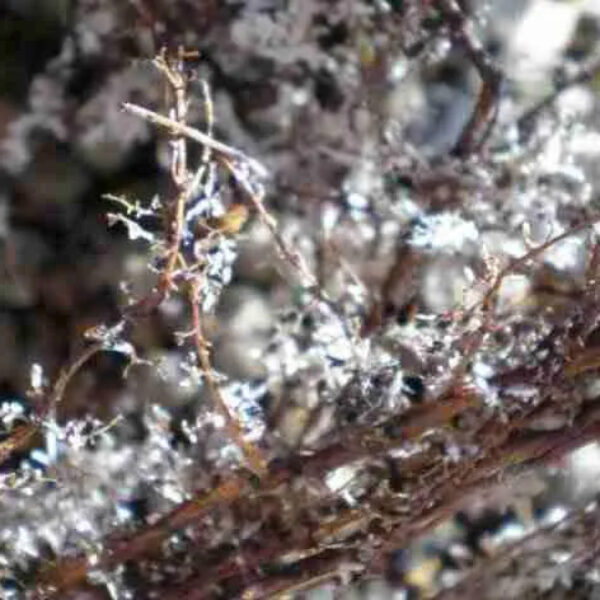
Over recent years, a frequent problem we have had in the vineyards is infestation by scale, a very destructive parasite that feeds on the sap in the vine and reproduces very quickly, invading the entire plant and killing it. With full respect for the environment and the strict regulations of organic farming, in Tenuta Giol vineyards we do not use any kind of insecticide to solve this problem. Instead, we use what is called “beneficial insect release”, introducing onto the plants insects that are enemies of these parasites that destroy their larvae and therefore limit infestation and reduce the consequent effects on the vine.
Fertilising with mycorrhiza
Mycorrhiza is symbiosis between fungi and plant roots. Spreading mycorrhizae as an organic fertiliser brings several benefits. First of all, it promotes assimilation of the elements in the terrain: to ensure that the vine absorbs important substances from the soil, such as nitrogen and potassium, it is not sufficient for these to be merely present, so mycorrhizae carry out the important function of facilitating their absorption by the plant. Mycorrhizae help humification of the organic substance, making the soil more aerated and “comfortable” for the plant. This symbiotic association also strengthens the plant’s defences, based on the premise that top-of-the-stem wellbeing depends on root health.
Explaining vegan wines
Not many people know that animal-origin substances are used in oenology to clarify and stabilise the must and the wines. Alternatives do exist however: from bentonite to plant proteins, and we have chosen to use these in order to offer a better product, free from animal derivatives!
The animal-origin substances most commonly used are, to mention just a few, albumin and egg white, milk casein, gelatine obtained from pig skin and bones, isinglass, blood serum albumin and products made from chitin. These elements lend stability but the resulting wine lacks its true aroma and fragrance, and animal allergens can even cause allergic reactions or intolerances.
Vegan wines are very high quality, integral, pure products. They are to be preferred for their ease of digestion and more natural flavour.
Our values and our link with the local area
“Nature is the frame for all this, but it is also the original sense. And this is reason why still today I feel this intimate, real, deep, sincere, unspoken, silent pleasure that is perhaps how you too could also enjoy this place.”
Vittorio Carraro Giol
The nature of the terrain and the climate have a huge influence on the typicality of our wines. These soils are alluvial and prevalently gravelly, with a medium texture and fairly fertile. They are the same soils that give us other specialities such as Asparago Nobile di Cimadolmo asparagus and Radicchio Trevigiano. In summer, the climate offers average daily temperatures of 28-30°C while in the evening, the temperature drops by up to 18°C thanks to the hills. This explains why our wines have this affable acidity, fresh, elegant, fruity aroma and a pleasing well-balanced structure.
The soil is alluvial in origin. Over the millennia, the River Piave, which is just 3 km away, would periodically flood these fields, depositing a rich fertile layer over the original gravel.
Today this extraordinary circumstance makes our vineyards fertile, dry and healthy.
Below San Polo flows the richest aquifer in Northern Italy. The soil here is alluvial, and therefore light, but just a few kilometres downstream, it changes completely to become heavy and clayey: a natural barrier that blocks the groundwater and makes it rise. This is why we have natural springs in San Polo.
This is also the reason we have a little lake in the Castle Park (the only one of its kind in Veneto) and why there is a river inside our winery.
What’s more, this water is also rich in ammonia, which stimulates the fertility of the plants’ roots.
These are the ideal conditions for regular lengthy ripening that gives fruity, elegant, fine aromas and fresh, pleasant, well-orchestrated, balanced flavours.
These characteristics have met the favour of consumers down through the years and have made possible the success of our winery.
Awards and certifications
Tenuta Giol has always striven to raise awareness about environmental issues.
Our wines are all organic and vegan and we have now decided to share with you the goals and commitments that, in our small way, we strive to achieve every day.

Since 2007 all our products have been certified vegan and vegetarian.

This certification attests that all the carbon dioxide emitted for the production, packaging and transport of Fiber Film has been compensated for through financing and implementation of reforestation projects, the use of renewable energy sources and energy efficiency.
This is guaranteed by Carbon Footprint, the international organisation that certifies every kg of compensated CO2 with its VERRA standard.

In 1993 we obtained our first organic farming certification, which is renewed annually.

For the whole of 2022 we made sure that we recuperated all the film backing from our labels and we donated it to Cycle4green. This recycling operation (5.7 tonnes!) reduced our CO2 emissions by 10.8 tonnes.

Our attention to the environment and sustainability also involves our corks. For about 15 years now, all the corks we collect in the winery (for example after tasting sessions) are donated to Amorim Cork, a company that specialises in processing and recycling this material. Collaborating with this company allows us to contribute every year to reducing CO2 in the environment.
In 2026, we achieved Regenerative Organic Certified™ (ROC™) status, recognizing our commitment to regenerative organic agriculture.